
While residential developments in the United Arab Emirates frequently dominate global headlines, seasoned institutional capital targets a far more defensive asset class: premium commercial office equity.
Executing an elite UAE free zone business setup grants operational market entry. However, anchoring that corporate presence in physical, revenue-generating commercial real estate is what solidifies multi-generational wealth preservation.
The Dubai International Financial Centre (DIFC) commands the highest rental yields and lowest vacancy rates across the entire Middle East. This guide details how sovereign funds, family offices, and high-net-worth investors deploy capital into DIFC commercial assets with maximum legal insulation in October 2026.

The Strategic Dominance of DIFC Commercial Real Estate
The DIFC operates as an independent financial free zone governed by English common law. Unlike mainland commercial properties subject to standard civil codes, DIFC real estate transactions fall under the direct jurisdiction of DIFC Real Estate Law No. 1 of 2020.
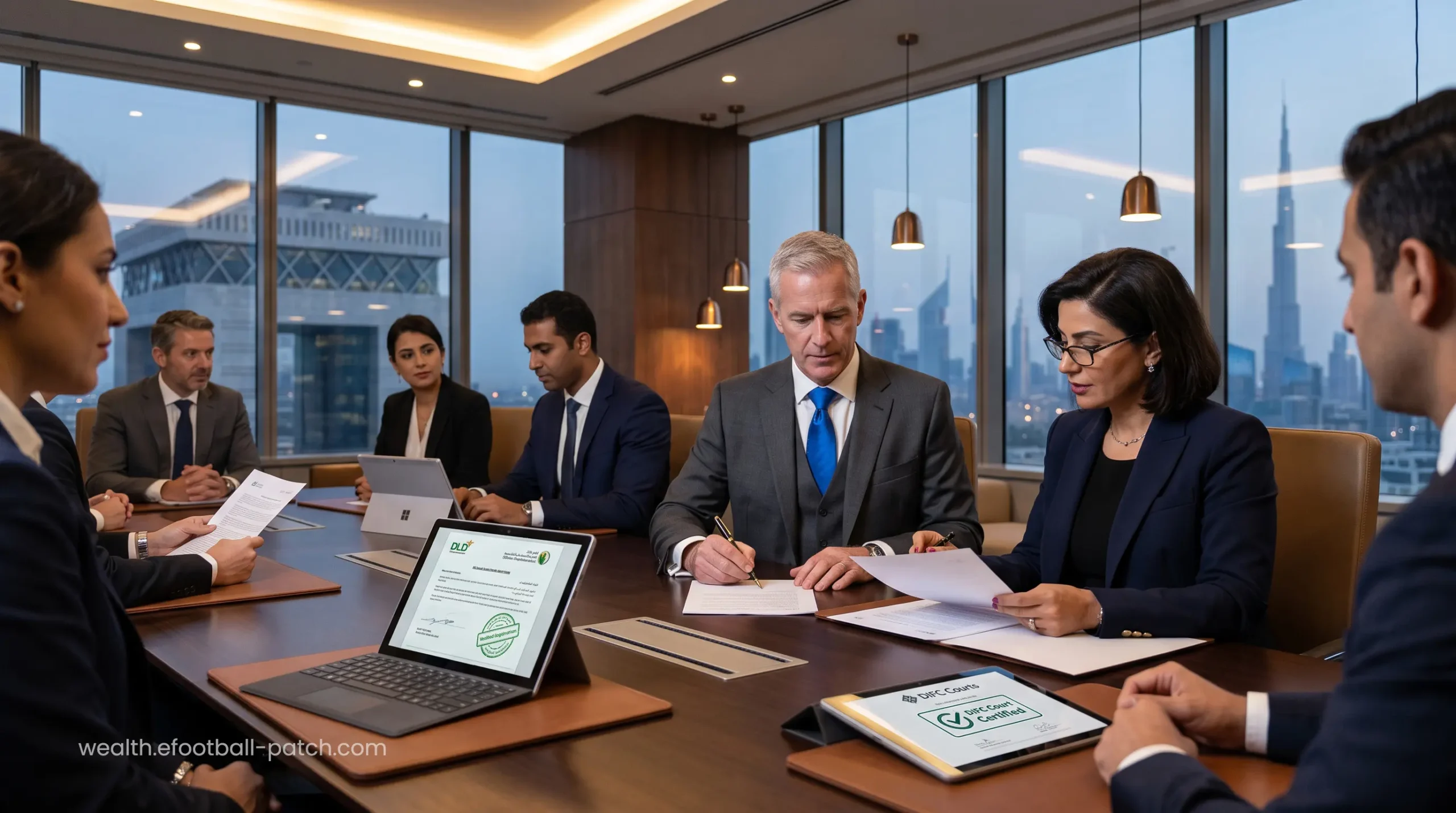
This distinct legal architecture provides international property funds with total transparency, rigid lease enforcement, and clear ownership registries. Commercial titles are registered directly with the DIFC Registrar of Real Property, working harmoniously with the Dubai Land Department (DLD).
Prime districts including Gate Precinct, Gate District, and DIFC South continue to experience severe Grade-A office supply constraints. Global hedge funds, private equity firms, and multinational advisory desks constantly compete for premium square footage.
Consequently, landlords enjoy unprecedented pricing leverage, mandatory upward rent reviews, and extended lease agreements that shield capital from standard retail real estate volatility.
Yield Metrics: Grade-A Office Space vs. Strata Retail
Deploying equity into commercial assets requires precise yield calculation. Grade-A commercial floor plates in prime towers generate consistent net capitalization rates between 7.2% and 8.8% in Q4 2026.
Unlike residential tenants who rotate annually, corporate occupants commit to institutional lease agreements spanning five to ten years. These corporate contracts eliminate turnover vacancies and guarantee stable, predictable cash flows.
Retail strata units on lower levels cater to elite dining, luxury fashion, and bespoke wellness brands. While retail rents command high headline figures, operational costs and fit-out allowances are higher, making office floor plates the superior defensive asset.
Furthermore, maintaining high-yield corporate property equity integrates seamlessly with your Dubai offshore wealth management infrastructure, serving as premier collateral for Lombard credit lines at local private banks.
💎 Mizanur’s Corporate Wealth Hack (Commercial Real Estate Edition)
The “Triple-Net Commercial SPV” Arbitrage:
Do not purchase individual strata suites. Form a DIFC Special Purpose Vehicle (SPV) to acquire an entire commercial floor plate on an off-market basis directly from institutional developers.
The Execution: Negotiate a Triple Net Lease (NNN) with a single multinational tenant where they cover all service charges, maintenance fees, and building insurance. You receive completely unencumbered net distributions, completely satisfy the AED 2,000,000 threshold for the UAE Golden Visa through your SPV equity, and eliminate all management friction while capturing maximum capital appreciation in Dubai’s most scarce financial corridor.
Institutional Tenant Stability and DIFC Court Protection
Commercial lease agreements inside the financial centre benefit from the specialized enforcement mechanisms of the DIFC Courts. Dispute resolution is swift, confidential, and completely predictable.
Commercial tenants in the DIFC include Fortune 500 tech firms, sovereign investment funds, and premier international law practices. Their default rates are virtually nonexistent compared to standard retail consumer sectors.
Additionally, lease contracts structured under DIFC common law allow for enforceable corporate guarantees and comprehensive bank security deposits, ensuring landlords are protected against any unforeseen business insolvency.

Bridging Real Estate Equity with Corporate Tax Compliance
Acquiring physical commercial real estate inside the financial free zone provides immense operational advantages for tax structuring. It gives your enterprise an indisputable physical footprint.
Under the 2026 Federal Tax Authority (FTA) auditing standards, maintaining verifiable physical premises is an absolute prerequisite to validate your corporate tax exemption as a Qualifying Free Zone Person (QFZP).
Holding commercial title deeds demonstrates genuine economic substance within the UAE borders. This permanently insulates your international group profits from overseas regulatory accusations of operating empty shell entities.
By securing premier commercial property equity inside the DIFC in October 2026, global capital holders lock in high-yield, sovereign-grade returns while cementing their corporate legacy within the Middle East’s most prestigious financial district.
Frequently Asked Questions (FAQ)
Does commercial property in DIFC qualify for the 10-year UAE Golden Visa?
Yes. Commercial properties located in designated freehold zones like DIFC qualify for the 10-year UAE Golden Visa, provided the investor’s unencumbered net equity meets or exceeds the statutory threshold of AED 2,000,000 as registered with the Dubai Land Department.
What average net yields can investors expect from Grade-A DIFC office spaces?
Prime Grade-A commercial office spaces inside the DIFC typically generate net yields between 7% and 9% annually, driven by severe corporate supply constraints and long-term institutional lease agreements signed by multinational tenants.
Can a foreign national own 100% of a commercial property in DIFC?
Yes. DIFC is an authorized freehold area where international investors and foreign corporate entities can hold 100% absolute ownership of commercial real estate without requiring a local Emirati partner or sponsor.
How are commercial real estate disputes resolved within the DIFC?
Commercial real estate disputes in the DIFC are resolved directly through the DIFC Courts or the Small Claims Tribunal (SCT). These proceedings operate exclusively in the English language under common law principles, ensuring rapid, binding, and transparent legal enforcement.